Antelope Canyon Light Beams: When They Appear and How to See One
The beam is real, seasonal, and stubbornly honest: high sun, clear sky, the right canyon, the right hour. Here is exactly how to line all four up.
 Written with Daniel Begay, Navajo guide & Southwest canyon specialist
Short answer
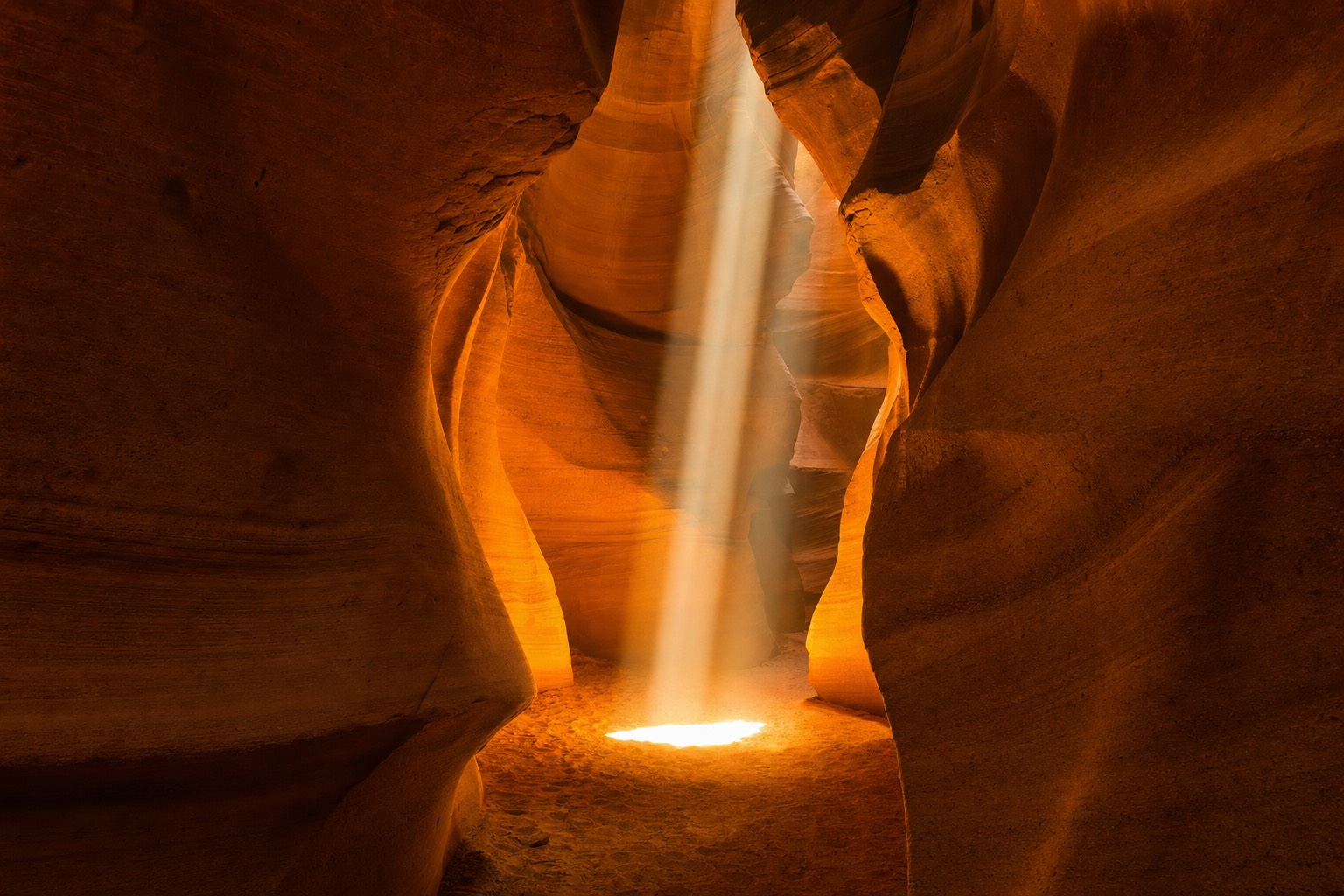
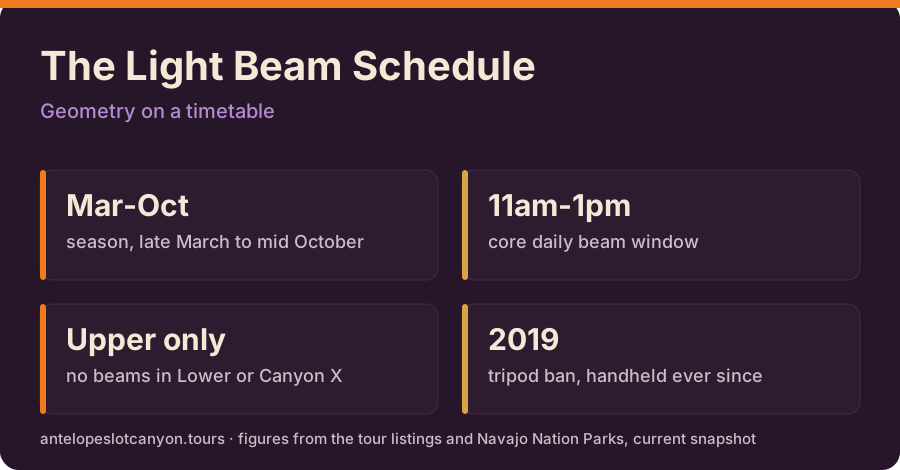
The vertical light beams appear only in Upper Antelope Canyon, from roughly late March through mid October, strongest around 11am to 1pm on clear days. They form when the high sun drops straight through the narrow slot opening to the sandy floor. No tour can guarantee one, since clouds cancel the show.
Light is the whole business out here. On my Monument Valley tours I plan every stop around where the sun will stand, because red rock is one landscape at 9am and another at noon, and Antelope Canyon plays that game at its extreme. The famous beam is not a lighting trick or a lucky accident. It is a schedule, written by the sun's height and the shape of one specific slot, and once you understand the schedule you can book straight into it. I pulled the current operator guidance and this season's visitor reports to lay it out.
When do the light beams appear in Antelope Canyon?
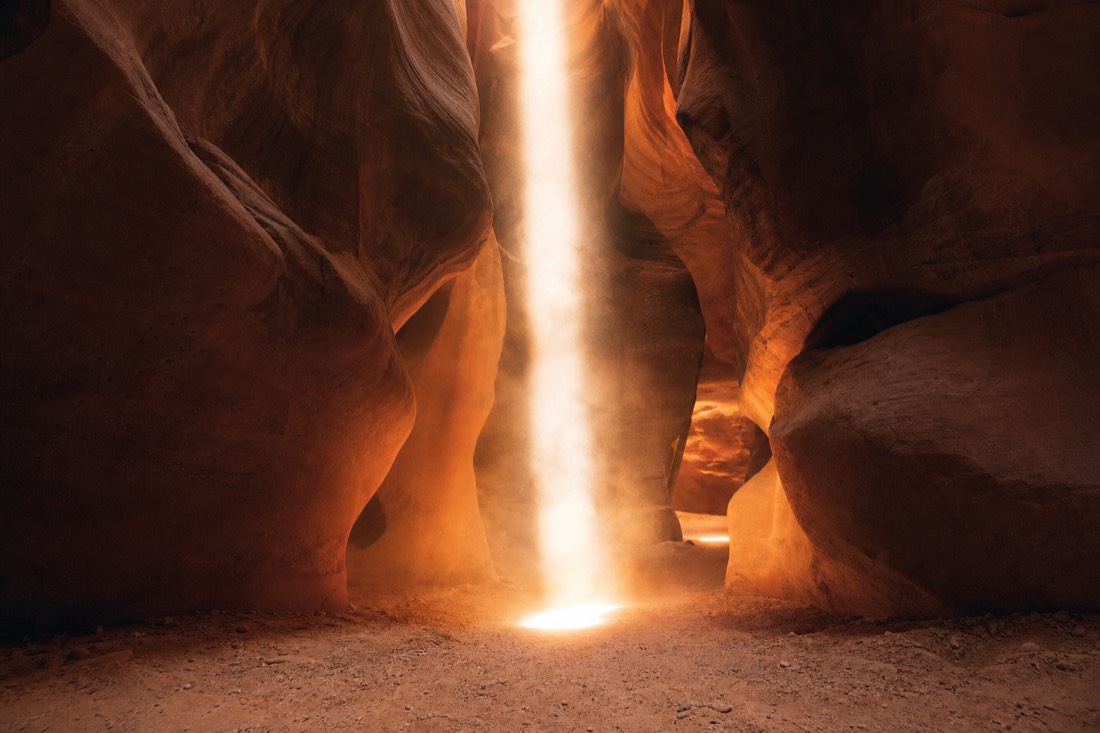
From roughly late March through mid October, in a midday window that centers on 11am to 1pm and stretches slightly longer near midsummer. Outside those months the sun never climbs high enough, and outside those hours it angles onto the walls instead of dropping to the floor. Clouds cancel beams on any date.
The season has soft edges: early spring and mid fall beams are thinner and briefer, while May through August delivers the fattest columns. Current operator guidance frames the reliable daily window as about 11am to 1pm, widening toward 10:30am to 2pm around the summer solstice. Here is the calendar in table form:
| Period | Beam status | Daily window |
|---|---|---|
| Mid October to mid March | No true beams | Low-angle glow on walls instead |
| Late March to April | Season opens, thinner beams | Near midday, short window |
| May to August | Peak beams | Roughly 10:30am to 2pm at its widest |
| September to early October | Strong but shortening | 11am to 1pm |
| Any cloudy day | No beams | The sky decides, not the calendar |
Month-by-month trip planning around this window, including crowds and monsoon risk, lives in the best time to visit guide.
Which canyon actually gets the beams?
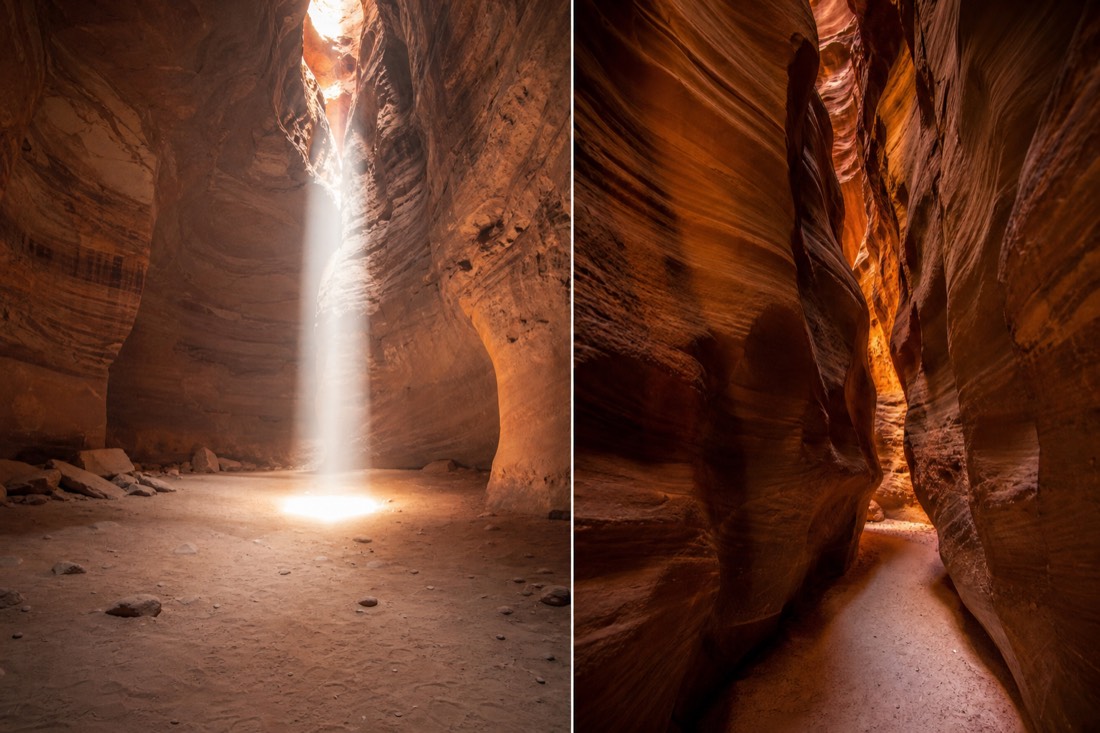
Upper Antelope Canyon, and only Upper. Its A-shape, a narrow crack at the rim opening to a wide sandy floor, gives a high sun a clean drop to the ground. Lower's inverted V and Canyon X's mixed terrain light up with reflected color instead, beautiful but beamless.
This is the single most common booking mistake I hear about: someone books Lower in July expecting the postcard column of light. Lower is a wonderful walk, arguably the better pure walk, as our Upper vs Lower comparison lays out, but its geometry sends sunlight ricocheting down the walls rather than through to the floor. The section-by-section light menu:
| Section | Signature light | Best hour for it |
|---|---|---|
| Upper Antelope | Vertical beams to the floor, in season | 11am to 1pm |
| Lower Antelope | Layered wall glow, orange to purple | Late morning through afternoon |
| Canyon X | Deep-slot glow, quieter chambers | Late morning to midday |
The beam corridor itself is run by the licensed Upper operators, with Antelope Canyon Tours among the long-running names walking that route daily.
Why do the beams only happen at midday?
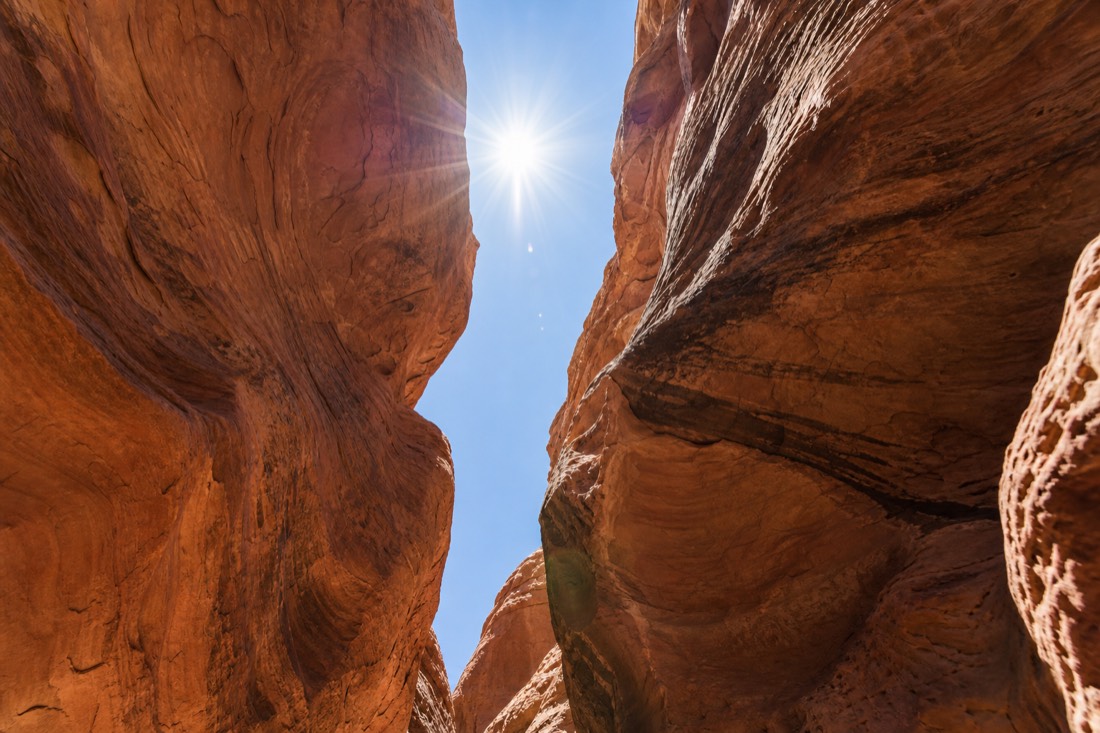
Plain physics: the slot's opening is a narrow crack in the rock roof, and sunlight travels in straight lines. Only when the sun stands nearly overhead can its rays pass through that crack and reach the floor eighty-odd feet down. A lower sun hits the canyon wall partway and stops there.
Think of a mail slot in a tall door. Slide a flashlight beam through it straight on and light lands on the floor; angle the flashlight and the beam smacks the inside of the door. The sun is the flashlight, and its angle changes two ways: by hour, peaking at local noon, and by season, standing highest in midsummer and too low all winter. That double dependence is why the beam calendar and the beam clock both matter, and why late March and mid October act as the on-off switches. Dust does the final bit of stagecraft: fine sand drifting through the shaft scatters the light and turns an invisible column into a visible one. Dry desert air, a little breeze over the rim, and the beam draws itself.
Can a tour guarantee you a light beam?
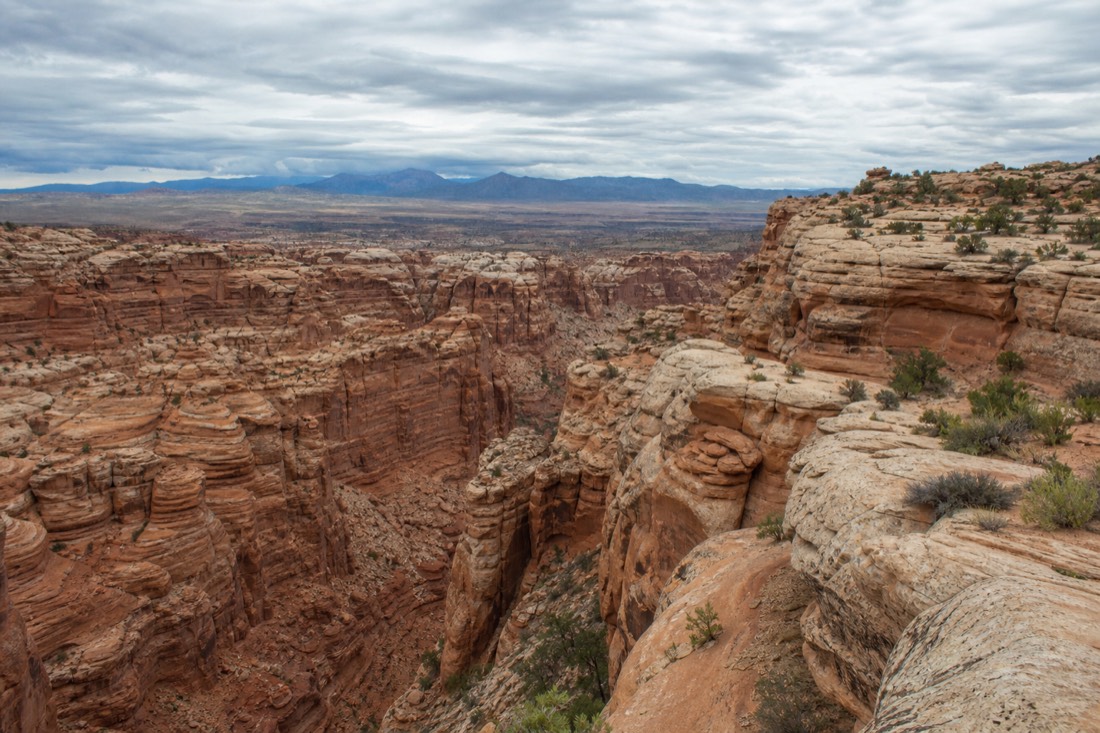
No, and be wary of anyone who implies otherwise. Operators can put you in the right canyon at the right hour in the right months, which is most of the battle. The remaining variable is sky: clouds, haze, or a monsoon cell at the wrong moment mean no beam, with no refund for weather that merely disappoints.
I say this as a guide who has disappointed guests with the truth before selling them a pretty lie: the beam is a probability you can raise, never a promise. In-season midday slots on clear-forecast days get you close to the ceiling of that probability. Monsoon afternoons, mid June through September, carry the double risk of cloud cover and outright cancellation when flash-flood conditions threaten. Reviews on the big Upper listings occasionally show one-star ratings for cloudy days, which is like one-starring the ocean for a flat surf day. Book the window, check the forecast, and hold the result lightly. The canyon without a beam is still the canyon.
How do tours put you in front of a beam?
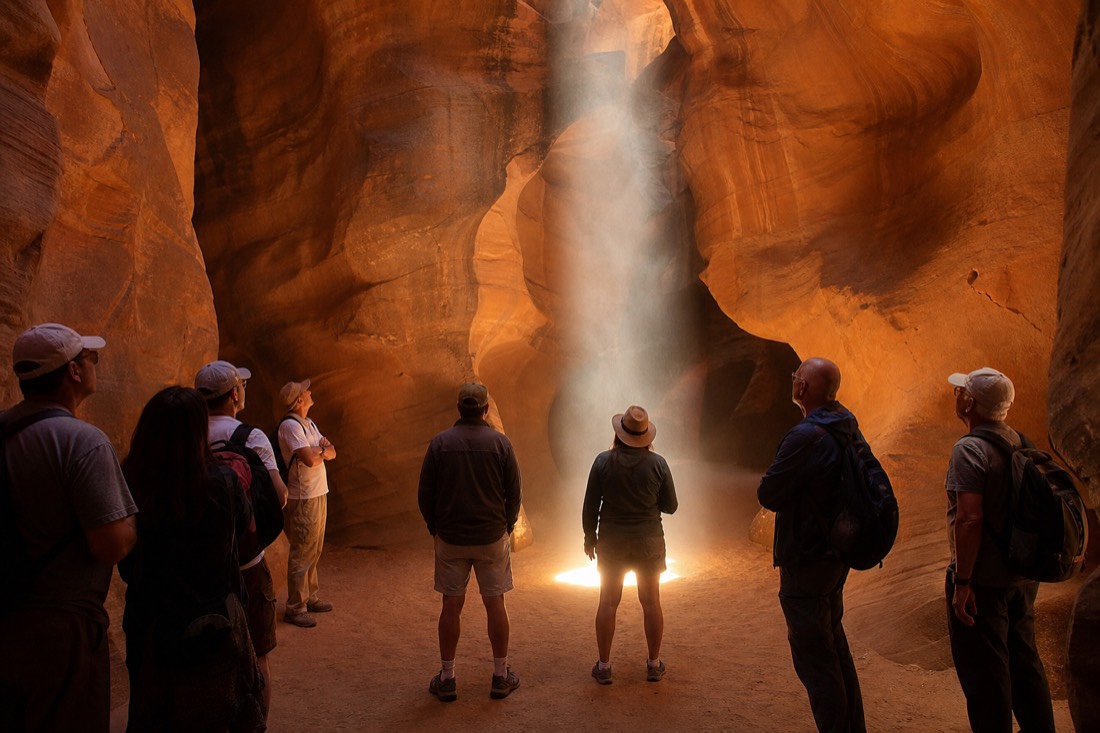
By owning the clock. Operators concentrate departures into the midday window in season, pace groups so each reaches the beam chambers inside it, and time pauses at the known beam spots. Guides point out the angles visitors reliably photograph. Your job reduces to booking the right slot early enough to get one.
The machinery is visible in the schedule: groups of roughly 10 to 15 enter on rotations as tight as every eight minutes in peak season, and the midday departures are priced and fought over accordingly. July's midday slots reportedly sell out months ahead, while morning Upper slots sell last, which tells you exactly what the market thinks of the window. The booking play, in one table:
| Your goal | Book this | Lead time |
|---|---|---|
| Maximum beam odds | Upper, 11am to 1pm, May to August, clear forecast | Two to three months for summer |
| Beams with fewer people | Upper midday, late April or early October | Several weeks |
| Beautiful light, no beam needed | Lower or Canyon X, first morning slot | Days to weeks |
| Monsoon-week trip | Morning slots plus flexible cancellation | Watch the forecast |
When you are ready, book the midday Upper Antelope guided entry and check live availability and prices on Viator; the Navajo permit is included, and note the strict cancellation rule, refunds only five or more days out.
Is this the most photographed slot canyon, and can a phone catch the shot?
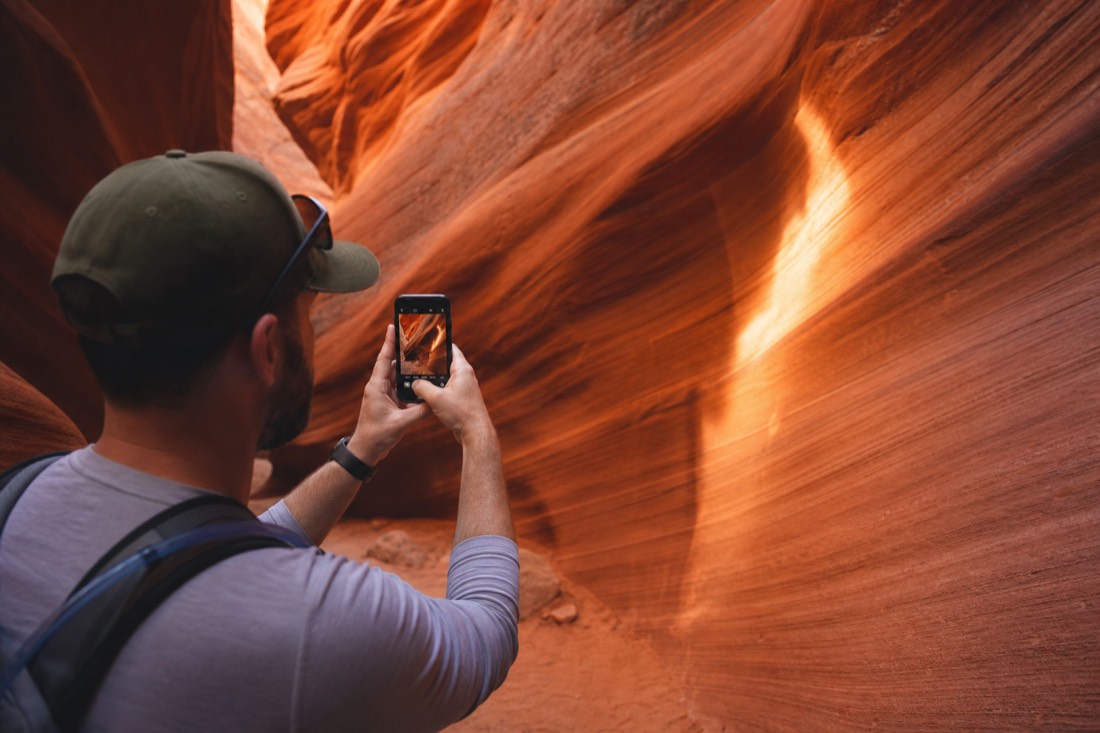
Antelope Canyon ranks among the most photographed slot canyons on Earth, and its beam images helped make slot canyons a global bucket-list category. Yes, a modern phone catches the shot: midday light is strong enough for handheld exposure, which matters because tripods are excluded on standard sightseeing walks; Canyon X’s photo option is different.
The famous images did the marketing that no ad budget could, and every midday group now walks in carrying the same ambition. The equipment story has flattened in photographers' favor anyway. Upper’s standard sightseeing tours are handheld; Canyon X has a separate photography upgrade, so this Upper beam advice concerns handheld shooting under the same operator rules, and recent visitor reports describe current phones handling the midday chambers well. Brace against a wall for the dim sections, tap to expose for the beam rather than the shadows, and shoot bursts while the dust drifts. Deeper technique, settings, and what the pros do differently now live in our photography guide.
How likely is a beam, month by month and hour by hour?
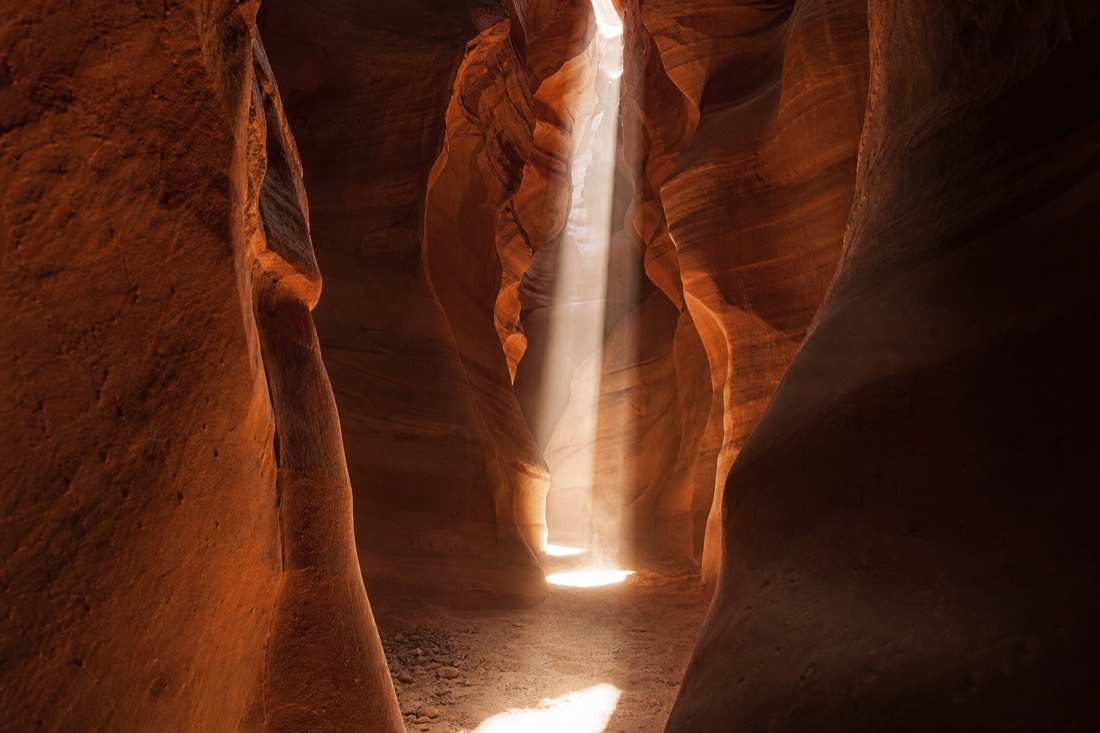
On a clear day, the odds peak between 11am and 1pm from May through August, stay strong in September and early October, and thin at the late-March and mid-October edges. Before 10:30am or after 2pm you get wall glow, not a floor-reaching column, in any month. From mid October to mid March the answer is none.
Nobody publishes a beam forecast, so what follows is a planning read of the current operator guidance, not a guarantee, and every cell assumes clear sky. Two variables set the grid. Month sets how high the sun can climb, and hour sets whether it is up there yet. In midsummer the sun stands high enough that the window stretches to roughly 10:30am to 2pm; in April and early October it barely clears the crack at true noon, so the window shrinks to a tight hour around 11am to 1pm and the columns come thin. Outside the season, the sun never gets there at any hour, which is why a January midday tour is a beautiful glow walk and nothing else. Read the grid across a row for your month and pick the departure that lands you inside the canyon, not at check-in, during the peak cells. Then remember the clock trap: Page skips daylight saving and the Navajo Nation observes it, so an hour's confusion can move you from the peak cell into a low one. Book the departure that puts you in the chamber at the right time on the operator's clock, and the best time to visit guide will help pick the month.
| Month block, clear sky | 9 to 10:30am | 10:30 to 11am | 11am to 1pm | 1 to 2pm | After 2pm |
|---|---|---|---|---|---|
| Mid October to mid March | None | None | None, glow only | None | None |
| Late March to April | None | Low | Moderate, thin columns | Low | None |
| May to August | Low | Building | Peak | Strong, fading toward 2pm | Low to none |
| September to early October | None | Low | Strong | Fading | None |
| Any cloudy hour | None | None | None | None | None |
What kills a beam even inside the season?
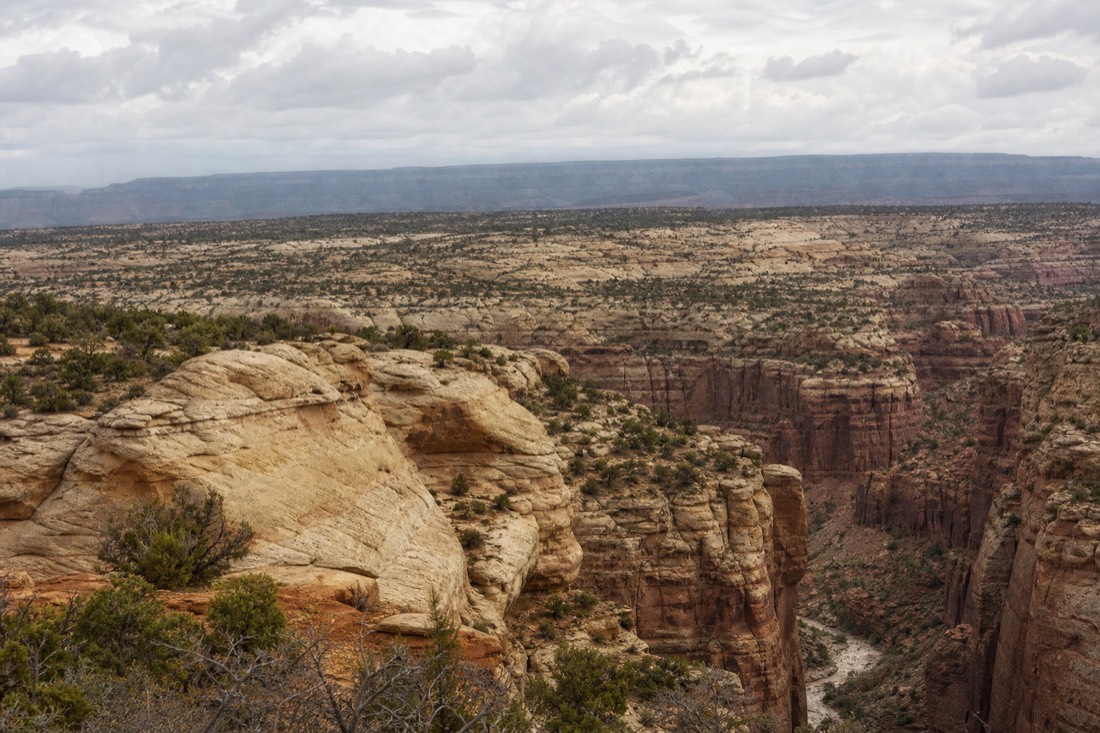
Cloud is the big one, and thin haze or smoke can mute a column to a soft shaft. Then the wrong canyon, since only Upper's shape delivers a beam; the wrong hour, outside the midday window; the season edge, when columns are brief; and the monsoon, which cancels tours outright when flash-flood risk rises upstream.
I read the one-star reviews on the big Upper listings so you do not have to, and most of them are one of these six things wearing a different hat. Cloud is first and unarguable: the beam is direct sunlight through a crack, and an overcast noon in June produces the same result as a clear noon in December. Haze and smoke are the subtler version, muting a hard column into a soft, wide shaft that photographs as glow. Then the human errors. Booking Lower or Canyon X for a beam is the canyon mistake, and it is common enough that I put it near the top of the Upper vs Lower comparison. Booking a 9am Upper departure in July is the hour mistake; the canyon is lovely at nine and the beam is not there. The season edge is not a mistake so much as a trade, thinner beams for thinner crowds, but visitors who expect the August postcard in the first week of April are disappointed by physics. Last, the monsoon. From mid June through September, storms upstream raise flash-flood risk and operators pull departures, sometimes mid-day; this past June the National Weather Service issued a warning to clear the area slots outright. Refunds are standard, beams are not rescheduled. The flash floods guide explains why nobody argues with that call.
| Beam killer | When it bites | Can you control it? | What to do |
|---|---|---|---|
| Overcast sky | Any date | No | Watch the forecast; hold the result lightly |
| Haze or smoke | Dry, windy, or fire-season days | No | Expect a soft shaft; expose for the glow instead |
| Wrong canyon | Any Lower or Canyon X booking | Yes | Book Upper for the beam; book the others for the walk |
| Wrong hour | Departures before about 10:30am or after 2pm | Yes | Target 11am to 1pm inside the canyon |
| Season edge | Late March, early April, early to mid October | Partly | Accept thinner columns, or shift to May through September |
| Monsoon cancellation | Mid June to September, especially afternoons | Partly | Morning departures, flexible cancellation, a plan B day |
| Wrong clock | Summer bookings across the Page and Navajo Nation time-zone line | Yes | Confirm which time the ticket means |
Where should you stand in the group when the beam appears?
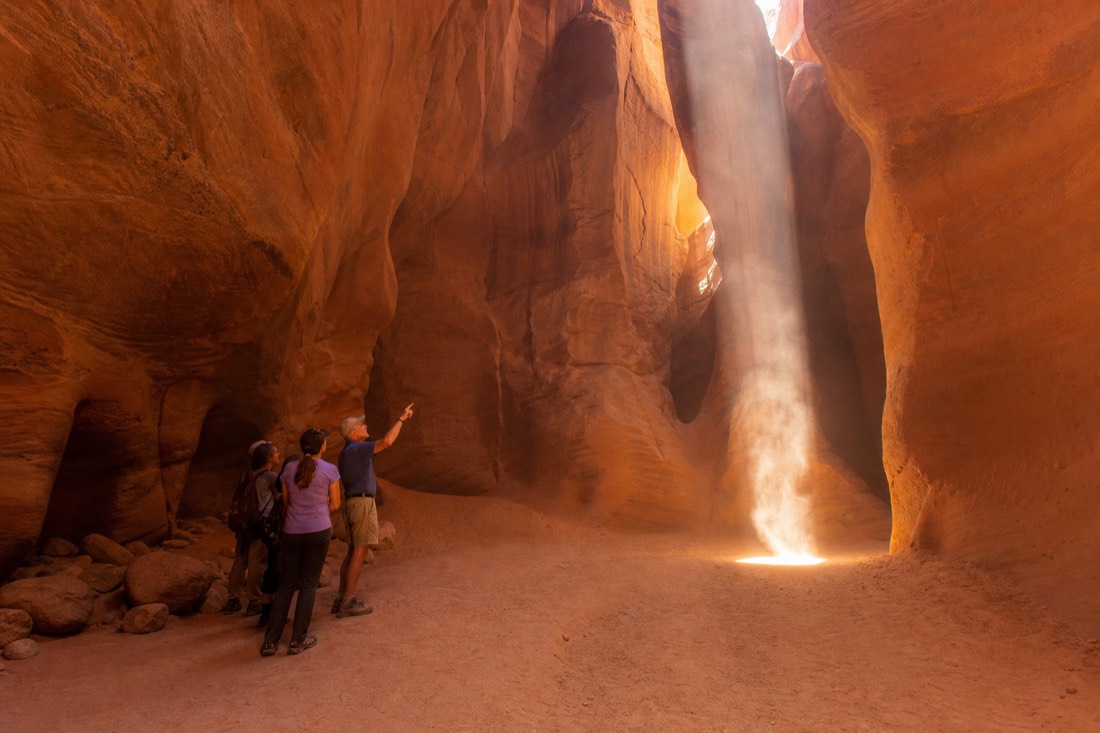
Wherever your guide puts you, and quickly. Groups of about 10 to 15 rotate through the beam chambers on tight schedules, with new departures roughly every eight minutes in peak season, so each stop is short. Reviews describe guides pointing out the reliable angles; the visitors who get the shot are the ones ready when that happens.
The mechanics are worth understanding before you are standing in the sand. In peak season Upper runs as a rotation: a group enters, walks to the first beam chamber, pauses, moves on, and the next group is a few minutes behind. That cadence is how a slot a few feet wide handles its peak-season volume, and it is also why the pause at each beam spot is measured in minutes rather than as long as you like. Inside that pause the guide is doing two jobs. One is safety and flow, keeping the group together and out of the next group's frame. The other is the part reviews praise most: pointing out the angle from which the beam reads best, so the group is not guessing while the clock runs. AACT is the operator recent visitor guidance singles out for smaller groups, with a stated 30-person cap on its shared Viator tour, and smaller means more elbow room at the beam spot. My allowances, from guiding groups of my own: have the phone unlocked and in camera mode before the chamber, not after; step to where the guide points and let the person behind you have their turn; and if you want a person in the frame, ask, because photographing others is a courtesy question in a sacred place. The chasing the light beam post is a review-built account of exactly what that pause feels like.
| Moment in the tour | What is happening | Your move |
|---|---|---|
| Check-in and grouping | Groups of about 10 to 15 formed; departures roughly every 8 minutes in season | Phone charged, lens wiped, camera app ready |
| Walk to the first chamber | Guide sets the pace, next group a few minutes behind | Stay together; note where the light is landing |
| The beam pause | A short stop; guide points out the angle that reads best | Step where the guide points, shoot, then yield the spot |
| Between chambers | Group moves to keep the rotation flowing | Do not double back for a second try; ask the guide instead |
| The exit | Group clears for the next departure | Review shots on the way out, not in the chamber |
What phone settings work for beam shots without a tripod?
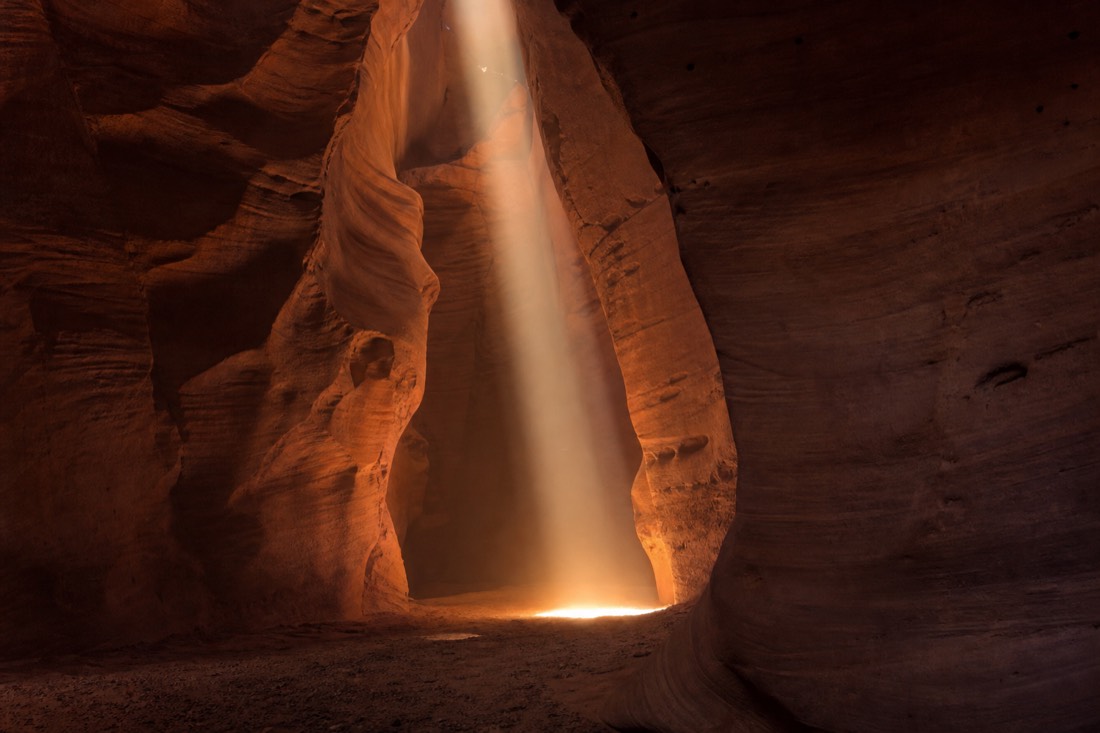
Handheld is the only option, so work with it: tap the beam to expose for the light and let the walls fall dark, drag exposure down rather than up, shoot bursts as the dust drifts, brace an elbow on rock, and turn the flash off. Recent visitors report current phones handling the midday chambers well.
Since 2019 the equipment question has had one answer for everyone, and it turns out to be a livable one. On standard Upper sightseeing tours, the tripod restriction means the pro with a full-frame body and the family with a phone are shooting the same chamber under the same rules and the same time pressure, and at midday there is more than enough light for a handheld frame. Current visitor reports back that up; one recent account describes an Android flagship handling an 11:30am beam without trouble. What matters is not the camera but the exposure decision. A phone's automatic metering sees a dark canyon and brightens everything, which washes the beam into a white blur. Tap the beam itself so the phone exposes for the light, then pull the exposure slider down a touch so the column keeps its edges and the walls go rich and dark. Flash off, always; it flattens the scene and annoys the group. Burst mode earns its place because the visible beam is really dust drifting through the shaft, and one frame in a burst catches the drift at its best. Brace an elbow or the phone's edge against rock for the dimmer chambers between beam spots. These are handheld allowances, not operator rules, and the phone camera post and our photography guide go deeper on both technique and etiquette.
| Setting or habit | Allowance | Why |
|---|---|---|
| Tap to expose on the beam | Tap the column, not the walls | Auto metering brightens the dark canyon and blows out the light |
| Exposure slider | Drag down slightly after tapping | Keeps the beam's edges and deepens wall color |
| Flash | Off | Flattens the scene, disturbs the group |
| Burst mode | Fire a burst as the dust drifts | The visible beam is drifting dust; one frame will be best |
| Stability | Brace an elbow or the phone's edge on rock | Standard sightseeing walks exclude tripods, monopods and selfie sticks; Canyon X’s photography option permits a tripod |
| Lens | Wipe before each chamber | Fine sand settles on everything in a slot |
| Orientation | Vertical for the column, horizontal for the chamber | The beam is tall; the room is wide |
What time exactly should I book for beams?
Target a departure that has you inside the canyon between 11am and 1pm, and near midsummer anywhere from about 10:30am to 2pm works. Confirm the time zone with the operator, since Page skips daylight saving while the Navajo Nation observes it, a one-hour trap in summer.
Do beams appear every clear day in season?
On clear midday tours inside the season window, beams are the expected outcome, strongest May through August. Thin cloud, haze, or smoke can mute them to a soft shaft, and the shoulder weeks at either end of the season produce briefer, weaker columns.
Does Lower Antelope ever get a beam?
Not the classic floor-reaching column; its inverted-V shape sends light down the walls as glow instead. Occasional narrow shafts touch ledges in high summer, but nobody should book Lower for beams. Book it for the sculpted walk and the color.
Was the famous record-setting photo taken here?
Antelope's chambers are among the most photographed slot canyon scenes anywhere, and several widely circulated fine-art images resemble them. We only print claims we can source, so we leave specific auction and attribution stories to the photography press.
Your next booking step
Upper Antelope with AACT
Have a travel date in mind? Upper’s beam corridor with a Navajo guide; fees and taxes included. Check the date before arranging the rest of this part of your trip.
General starting point — confirm the exact party and date
Select a date to load the Viator schedule. Availability and final price are confirmed on Viator.
Check dates for Upper Antelope with AACT
Adventurous Antelope Canyon Tours, Highway 98; arrive 30 minutes early. Return to the same base. Ages 8+; moderate fitness. Sandy walking and the outdoor stair/hill exit; no guaranteed beams. Not recommended during pregnancy or with spinal/cardiovascular conditions. Customer cancellation: full refund at least 24 hours before departure; reconfirm at checkout.
Compare routes, adjust your plan & budget
When Antelope Canyon's light beams appear, why only Upper gets them, the midday physics, how tours position you for the shot, and why no beam is ever guaranteed. These are different experiences, not interchangeable admission tickets. All listed guiding is in English.
Upper’s beam corridor with a Navajo guide; fees and taxes included. 80 minutes; English; from Page. Adventurous Antelope Canyon Tours, Highway 98; arrive 30 minutes early. Return to the same base. Ages 8+; moderate fitness. Sandy walking and the outdoor stair/hill exit; no guaranteed beams. Not recommended during pregnancy or with spinal/cardiovascular conditions. Customer cancellation: full refund at least 24 hours before departure; reconfirm at checkout.
A timed walk among Lower’s sculpted walls, with entry and the Navajo permit included. 60 minutes; English; from Page. Ken’s Tours, Lower entrance; arrive 30 minutes early. Return to the same site. Steel stairs and narrow passages; no bags or tripods. Not recommended during pregnancy or with spinal/cardiovascular conditions. Customer cancellation: full refund at least 24 hours before departure; reconfirm at checkout.
Two Canyon X sections on Taadidiin’s guided hiking route. Choose the hiking option. 90 minutes; English; from Page. Taadidiin Tours, Highway 98; arrive 30 minutes early, using Arizona/Phoenix time. Return to the same site. Steep access trail. Permit is listed as included but the API’s old fee amount conflicts with current operator information; confirm the final total. Guide service fee extra. No tripod on hiking option. Nonrefundable for customer cancellation on Viator; read the exact weather-cancellation terms.
Affiliate links: we may earn a commission at no extra cost to you. Schedule dates are not confirmed seats.