Antelope Canyon Photography 2026: The Rules Changed, Here's What Works Now
Choose handheld sightseeing or Canyon X’s dedicated photo option, then match your gear and timing to the route.
 Written with Daniel Begay, Navajo guide & Southwest canyon specialist
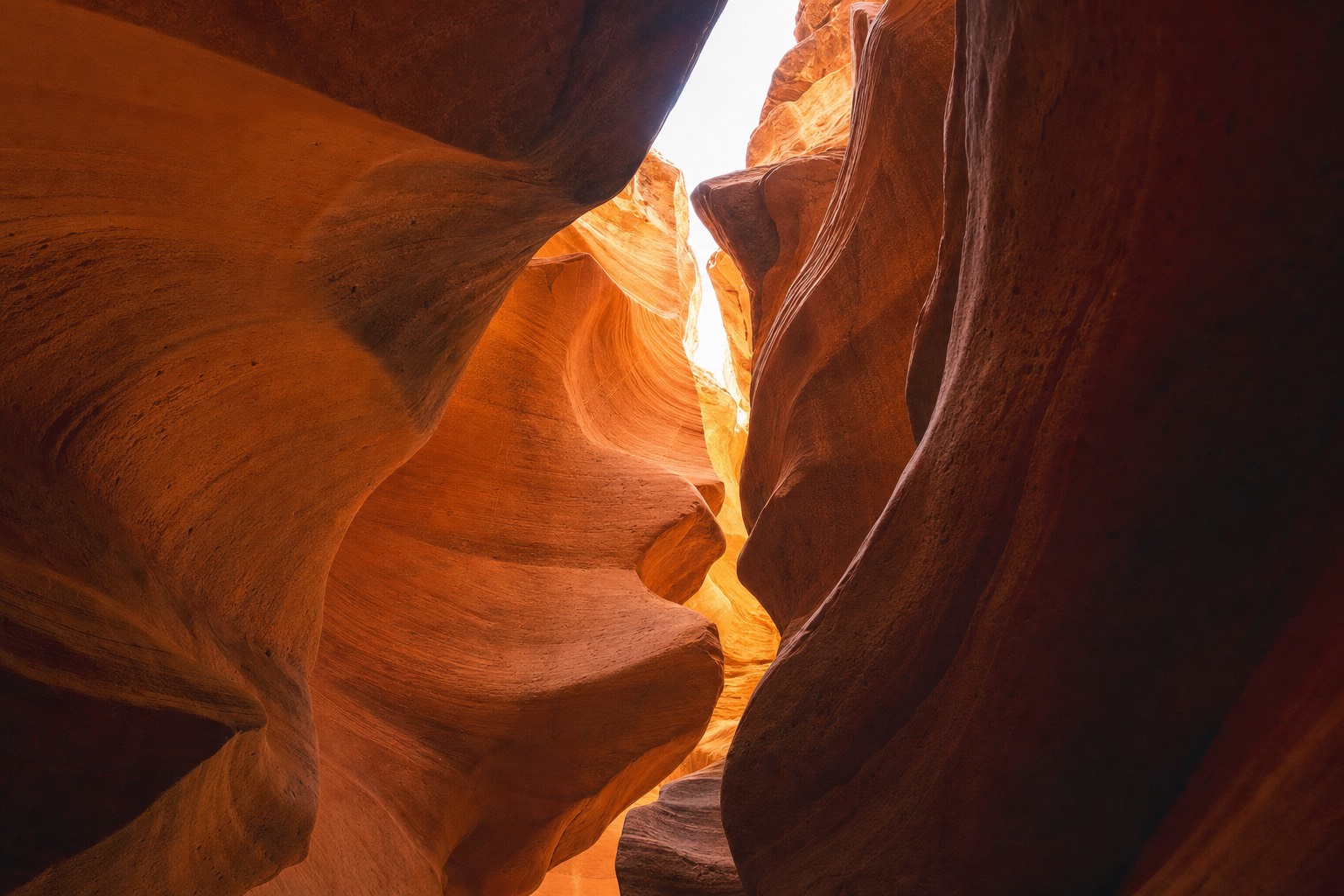
Short answer
Standard Upper and Lower sightseeing walks are handheld, but dedicated photo access has not disappeared everywhere: Canyon X offers a three-hour photography tour, ages 8+, allowing a tripod and one camera bag. Choose Upper for a chance of midday beam light and Canyon X’s photo upgrade for extended composition time.
Standard sightseeing tours keep moving and usually require handheld gear. That is not the whole market: Taadidiin offers a three-hour Canyon X photography option that permits a tripod and one camera bag. The planning choice is between that extended composition time and a standard walk in the canyon whose light and shapes you want to photograph.
Can you still book a dedicated Antelope Canyon photo tour?
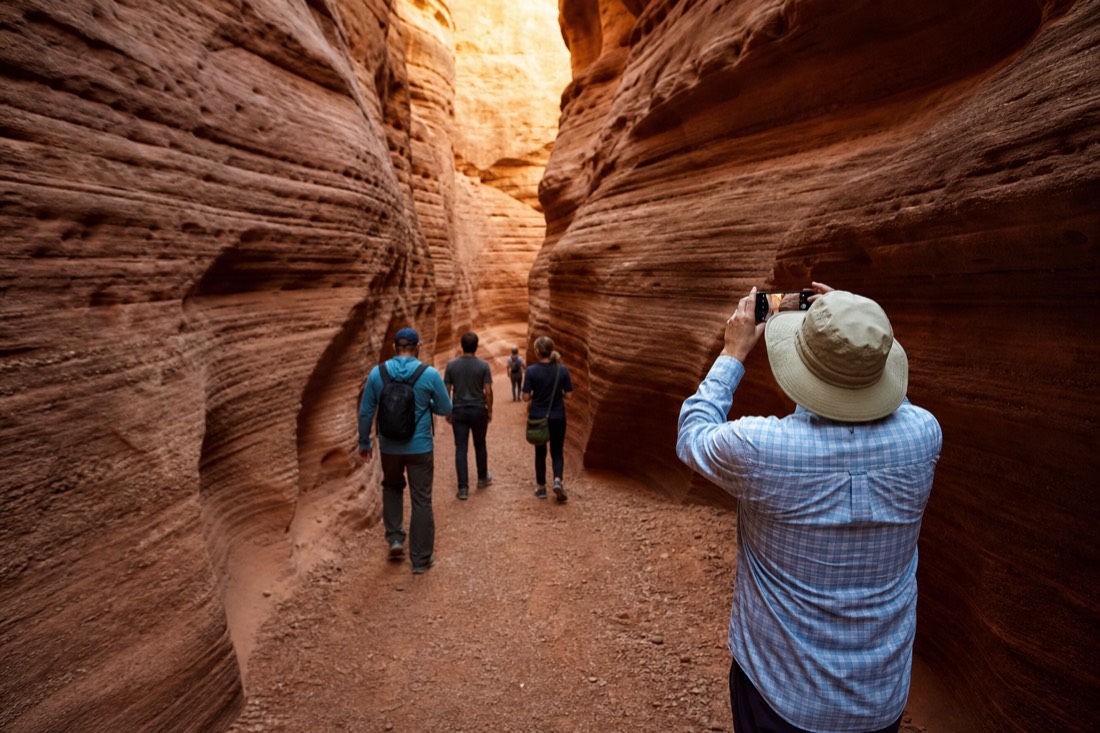
Yes, at Canyon X: Taadidiin’s three-hour photography option allows a tripod and one camera bag, for ages 8 and up. Standard Upper and Lower sightseeing tours remain handheld. Select the photo upgrade explicitly; a standard hiking ticket does not grant the same time or gear permission.
Older Upper photography-tour advice can describe a format that is no longer offered there. Canyon X’s current photo upgrade is a different, bookable experience: three hours, ages 8+, with a tripod and one camera bag allowed. Select that exact option if extra composition time matters; standard hiking tickets do not include those permissions. The tour comparison explains the other routes.
What camera gear is actually allowed inside?
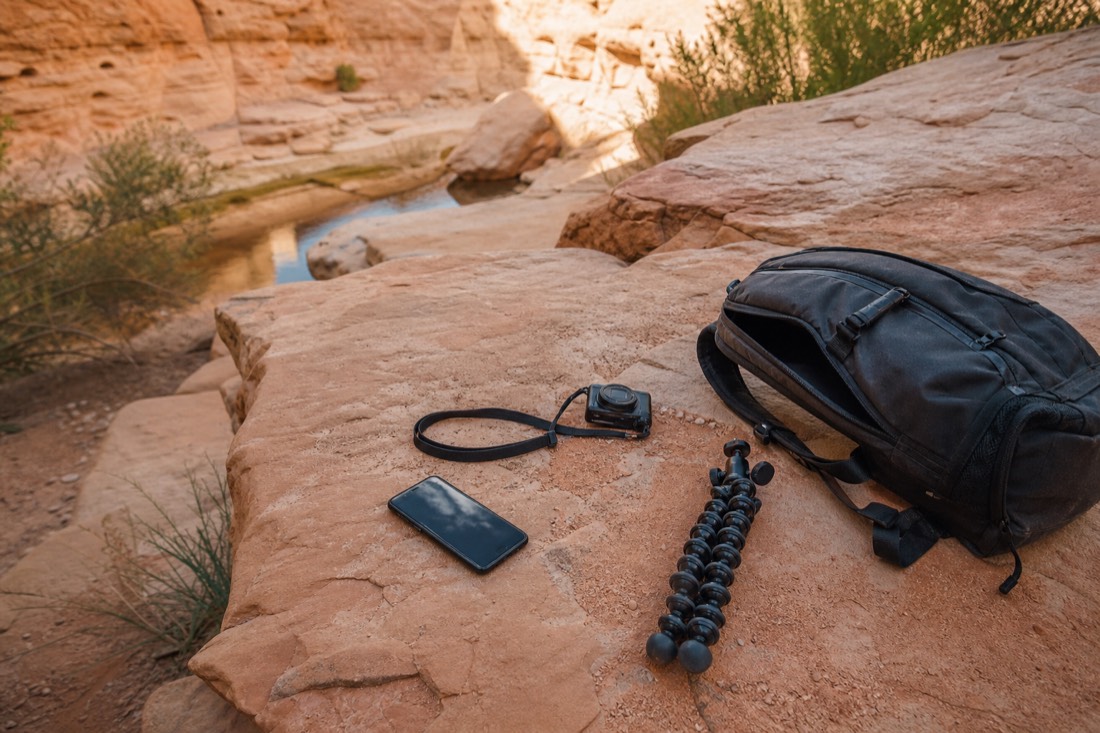
Phones and handheld cameras are fine. Standard sightseeing walks exclude tripods, monopods and selfie sticks; Canyon X’s photography option permits a tripod, operators restrict bags and backpacks, and drones are prohibited everywhere on Navajo Nation land. Plan on carrying a phone or one camera on a strap, and read your listing for the exact bag rule.
| Item | Allowed? | Notes |
|---|---|---|
| Phone | Yes | The most common camera in the canyon now |
| Handheld camera (any size body) | Yes | On a strap; you will be moving while you shoot |
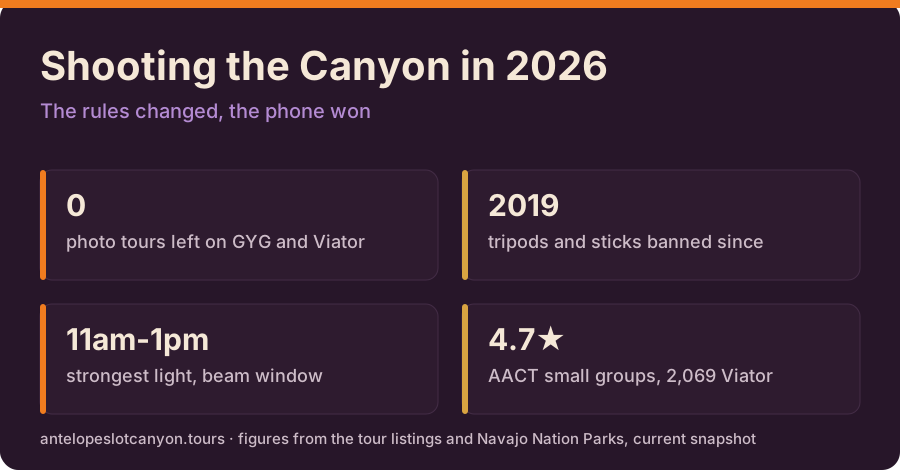
| Tripod or monopod | No | Banned since 2019, all sections |
| Selfie stick | No | Banned since 2019 |
| Backpack or large bag | Generally no | Operator rules restrict bags; check your listing |
| Drone | No | Prohibited across Navajo Nation land |
The gear ban is the universal part. The bag rule is the operator part, and it varies enough that the listing text is the only answer that counts for your date. My advice as a guide: treat the restriction as a gift. One camera, both hands free, eyes up. The people fighting equipment in a moving group get the worst shots in the canyon anyway.
When is the light actually worth planning around?
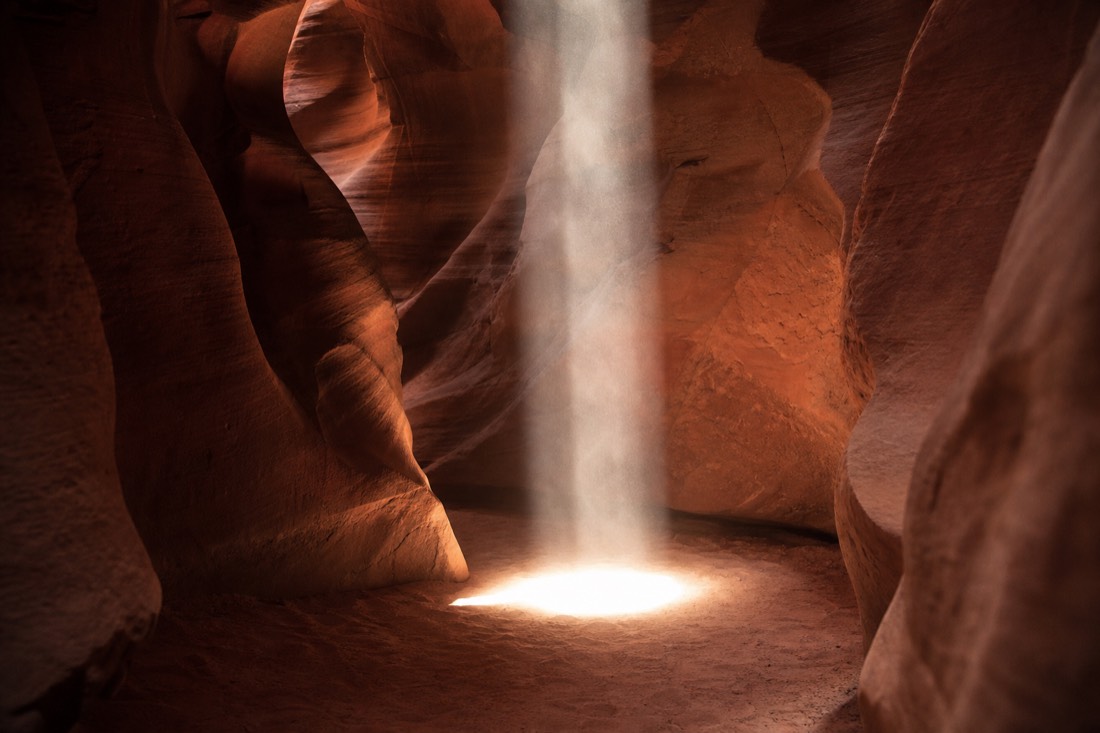
Vertical light beams form only in Upper Antelope Canyon, from late March to mid October, strongest roughly 11am to 1pm, and never on cloudy days. Outside that window the canyons still glow with bounced light, which photographs well all day. Winter trades the beams for softer, more even color.
| When | Beam chance | What your camera gets | Booking pressure |
|---|---|---|---|
| Late March to mid October, midday | Real, in Upper only | Beams, hard highlights, deep contrast | Highest; summer midday sells out months out |
| Late March to mid October, morning or afternoon | Low to none | Warm bounced glow, easier exposures | Moderate; mornings go last |
| Mid October to mid March | None | Soft, even, saturated wall color | Lightest of the year |
| Any cloudy day | None | Flat, even light, muted color | Weather makes the call, not the calendar |
The beam is an event with a schedule, and the schedule is unforgiving: the right canyon, the right months, the middle of the day, and a clear sky, all at once. I break the mechanics down in the light beams guide, and the seasonal trade-offs in the best time to visit guide. One more clock to respect: Page skips daylight saving while the Navajo Nation observes it, so confirm with your operator which time your midday slot actually means.
Which section photographs best: Upper, Lower, or Canyon X?
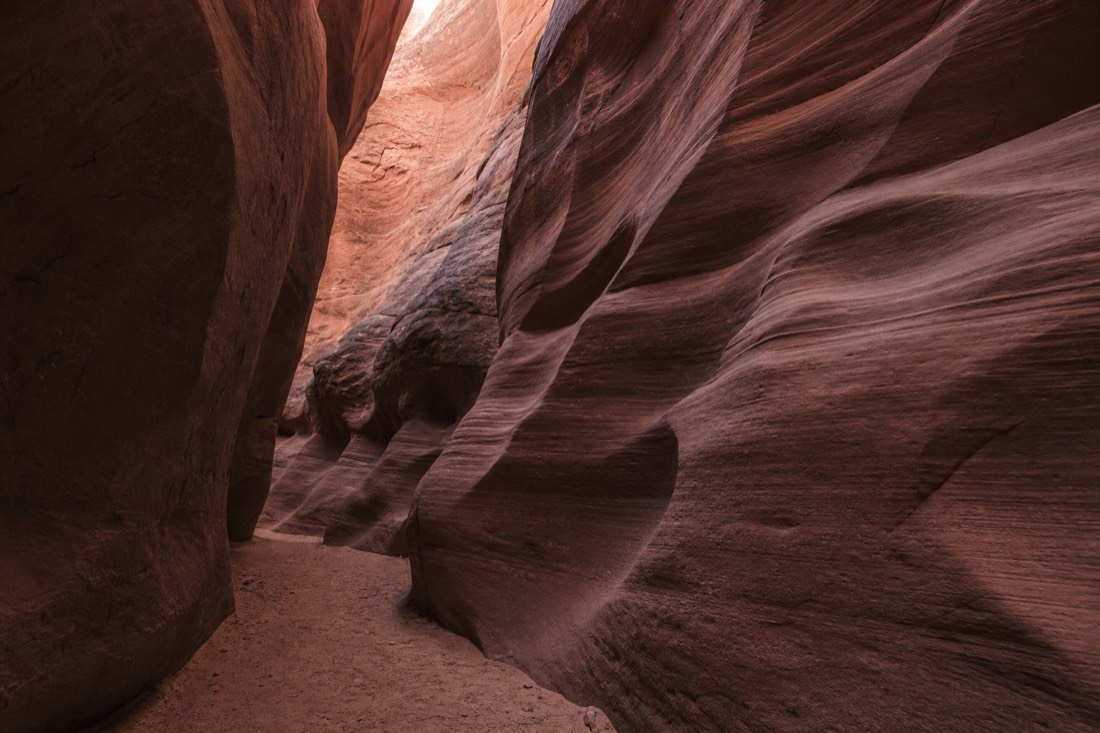
Upper for the beam shot, and only Upper. Lower for sculpted, layered walls and the most varied compositions in bounced light. Canyon X for shooting with room to breathe, since its crowds run far thinner. All three are handheld territory now, so choose for light and elbow room, not for gear.
| Section | What it gives your camera | Crowd pressure while you shoot | Terrain while shooting |
|---|---|---|---|
| Upper | The famous midday beams in season; dark, dramatic corridors | Highest; groups move in steady waves | Flat sandy floor, easiest to shoot while walking |
| Lower | Sculpted V-slot waves, bright bounced color, layered lines | High but one-way flow keeps it moving | Stairs and ladders; stow the camera on descents |
| Canyon X | Similar textures with far fewer people in frame | Lowest of the three | Entry slope, then slot sections |
Here is the honest framing I give travelers: the beam photo is an Upper product, everything else is a light-and-patience product. If the beam is the shot you came for, book a midday Upper Antelope Canyon tour in season and check live availability and prices on Viator. If crowds in your frame bother you more than missing beams, Canyon X is the quiet room of the three. Cancellation depends on the exact ticket: the checked AACT Upper and Lower Viator listings allow a full refund when canceled at least 24 hours ahead. Canyon X on Viator is nonrefundable for customer cancellations, while the checked GetYourGuide Canyon X listing allows cancellation at least four days ahead. Reconfirm the chosen option at checkout.
How do you get good photos on a phone?
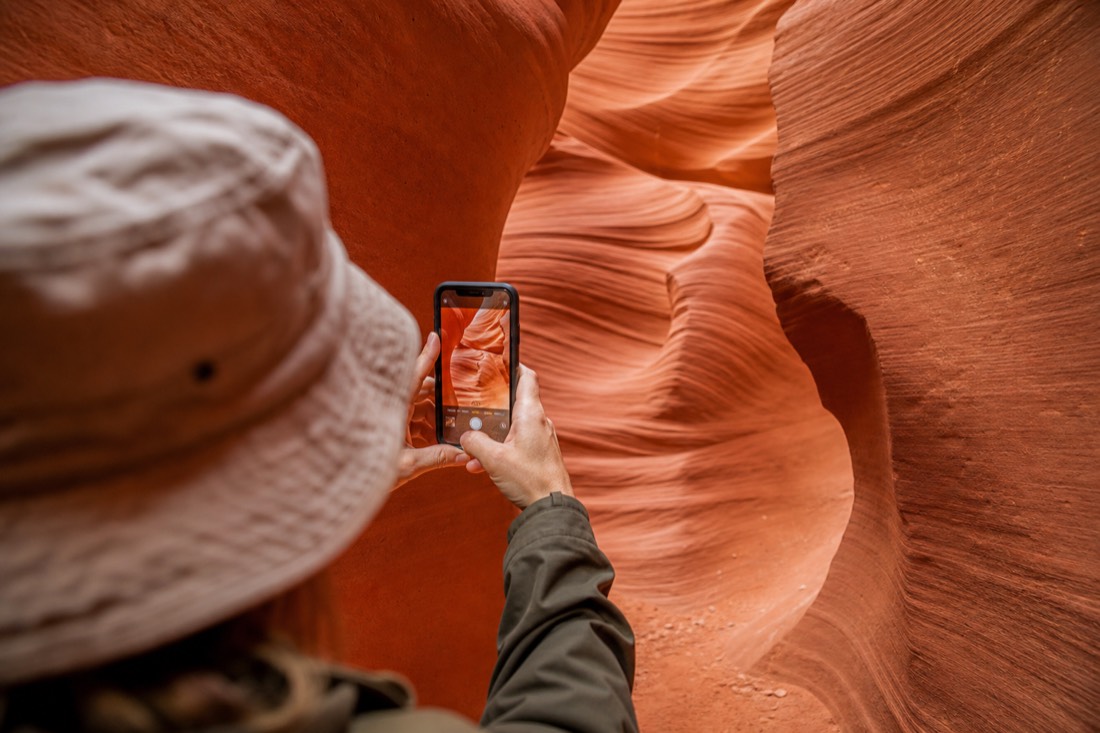
Shoot midday for the strongest color, wipe your lens constantly, and point the camera up as often as ahead. Recent visitors report strong results from current phones around 11:30am, and smaller-group operators leave more room to frame. Expect fine sand in the air, a moving group, and about an hour to work.
Phones genuinely suit this place. The dynamic range handles the bright-slot-dark-floor problem that used to demand exposure bracketing, and modern night modes hold the dim corridors steady without a tripod. The working problems are physical instead. Sandstone slots shed fine dust, so a lens wipe between shots is the single highest-value habit. The group sets your pace, so pre-decide your shots: walls up high, light on the sand, one texture close-up. Guides walk this canyon daily and will point out the angles everyone misses, so ask. I put a full walk-through of settings and habits in the phone camera field notes, and the short version is that the person who shoots less and looks more comes home with the better set.
What do guides expect from photographers inside the canyon?
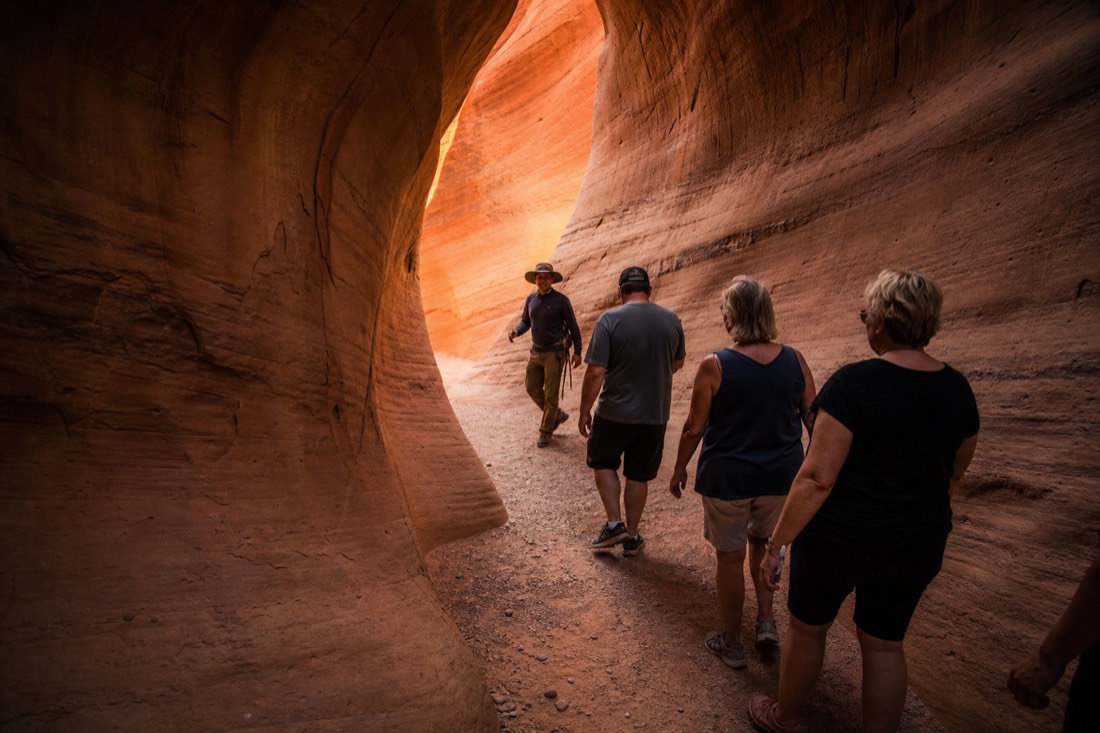
Keep moving, follow your guide, and treat the canyon as the sacred place it is. That means no wandering off, no climbing the walls, no drones, no alcohol, and respect if your guide asks that people not be photographed. Tours move steadily, so work with the pace instead of against it.
I say this as a Navajo guide, not as a rules poster: these canyons are not a backdrop that happens to be on tribal land, they are a living part of it. The visitors guides remember fondly are the ones who ask before photographing people, who let the group compress and stretch naturally instead of blocking a passage for one more frame, and who put the camera down for at least a stretch of the walk. Arizona's own tourism office publishes a good primer on visiting the canyon the right way, and it matches what operators ask daily. The etiquette is also the strategy. A photographer who moves with the group gets guided to the good light. One who fights the flow gets hurried past it.
How did the photography rules change, year by year?
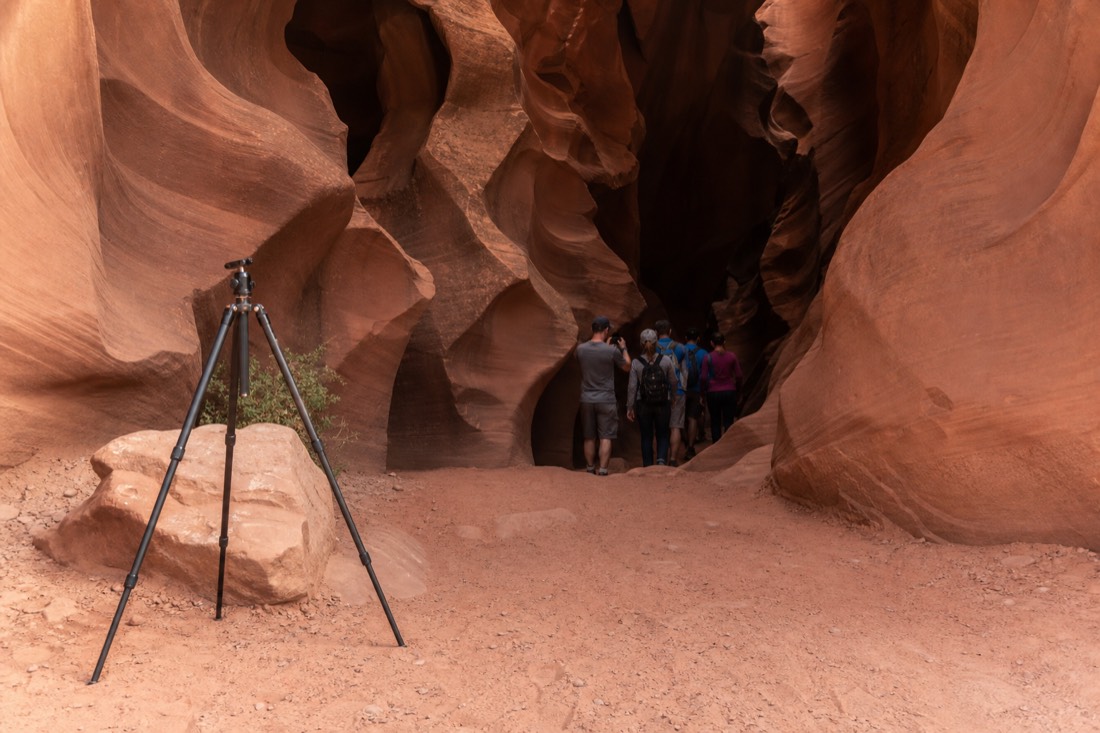
Standard sightseeing tours restrict tripod equipment, while Canyon X’s dedicated photography option permits a tripod and one camera bag. Bag rules differ by operator and option. Check the exact ticket rather than applying an old Upper photography rule to every section.
The guided system controls access and group movement through confined passages. Standard sightseeing groups have to keep moving, which is why handheld shooting remains the useful default. Dedicated Canyon X photo access has different gear and time permissions. Bag rules also vary; confirm them with the exact operator before check-in.
| Year | What changed | What it means for your camera today |
|---|---|---|
| 1997 | Canyon closed to the public after the Lower Antelope flood; access became guided-only through authorized operators | Every shot is taken inside a moving guided group |
| 2019 | Upper sightseeing gear restrictions tightened | Standard walks are handheld; check the exact operator |
| After 2021 | Older Upper photo-tour formats discontinued | Do not apply that history to Canyon X’s current photo option |
| May 2023 | Dixie's Lower Antelope bans all bags, including clear bags | Camera on a strap, spare battery in a pocket |
| 2026 | Navajo Nation permit set at 15 dollars per person, per location, per day | Budget it per canyon; some listings include it, some collect it on site |
| September 2026 | Canyon X photo option verified | Three hours, ages 8+, tripod and one camera bag permitted |
One footnote worth stating plainly: the 1997 flood guide explains why the guided system exists at all, and every camera rule since is a smaller echo of the same idea. The canyon is run for the group first and the photograph second, and the photographers who accept that ordering do better than the ones who resent it.
What phone settings and habits work in each section?
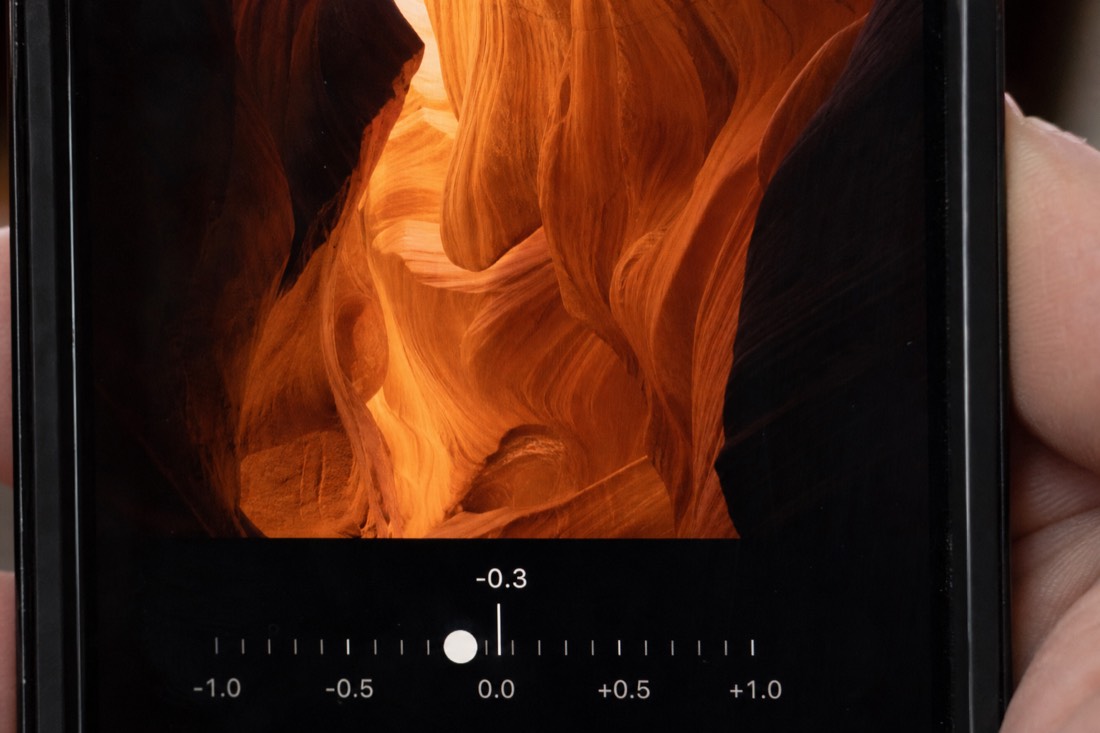
Turn the flash off everywhere, tap the brightest wall and drag exposure down slightly, keep HDR on for the sky slit above you, and lock focus before you raise the phone in the beam. In Lower, put the phone away on every stair flight. In Canyon X, slow down; the room is the point.
Nothing below is a rule from an operator. It is the set of habits that recent visitors report working, plus what any guide who watches phones in a slot canyon learns to say. The three canyons throw three different problems at a phone, and a single default setting does not survive all of them.
| Habit | Upper (beams, dark corridors) | Lower (bright V-slot, stairs) | Canyon X (quiet, room to work) |
|---|---|---|---|
| Flash | Off; it flattens the beam and lights dust | Off; bounced light is the picture | Off |
| Exposure | Tap the beam or the brightest wall, drag down until the highlight holds | Tap a mid-tone wall; the slot is bright enough that autoexposure is close | Meter normally, then bracket a frame darker |
| HDR | On for shots that include the sky slit | On; the sky-to-floor range is the whole challenge | On or off, you have time to test both |
| Focus lock | Lock on the sand where the beam lands before you shoot | Not needed at walking pace | Lock on texture for close-ups |
| Orientation | Vertical for beams and tall corridors | Vertical for the V, horizontal for the wave walls | Whatever the shape asks; you can shoot both |
| When to pocket the phone | While the group is repositioning | On every stair and ladder flight, no exceptions | Rarely, but on the entry slope |
| Lens wipe | Between every stop; the sand is fine and constant | Same | Same |
The exposure habit matters most in Upper. Phones read the dark walls and brighten the whole scene, which blows the beam into a white smear. Pull it back until the light column has edges. Lower is friendlier to auto everything because bounced light fills the slot, but the stairs are where phones get dropped, and a phone on a strap or in a pocket for thirty seconds costs nothing. Canyon X rewards patience more than settings. If you want the long version, the phone camera field notes walk through a full set of frames from check-in to exit.
Which time slot photographs best in each section?
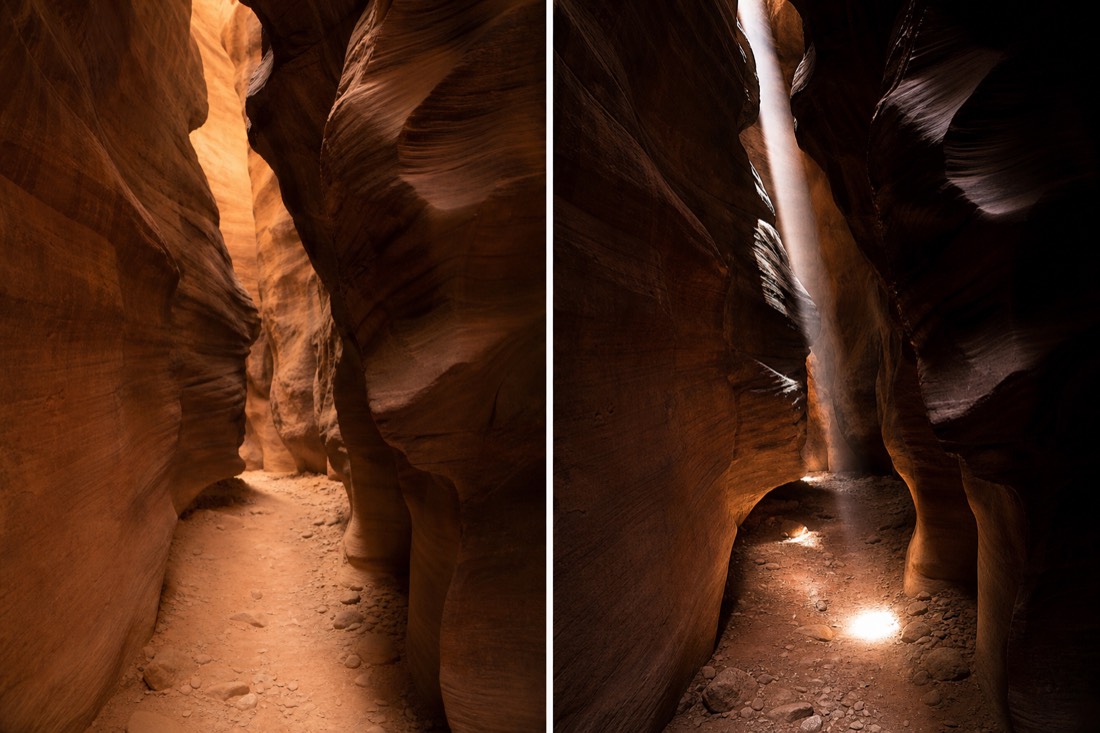
Upper's beam is a midday event, roughly 11am to 1:30pm from late March to mid October, so book that window if the beam is the shot. Lower's own operator points to mornings from about 7:15 to 10:45am or afternoons after 1:45pm for the best viewing. Canyon X photographs best at the first departure, when it is emptiest.
This is a different question from the season table earlier in the guide. Season decides whether a beam is possible; the slot on the day decides what the light and the crowd are doing when you walk in. Dixie's Lower Antelope publishes its own recommendation for the March to October months, and it is the mirror image of Upper's: skip the middle of the day. Lower is a bright V-shaped slot, and its color reads best when the sun is bouncing rather than beating straight down. Upper needs the straight-down sun. Canyon X has no beam calendar and thin crowds all day, so its scorecard is about people, and the forum consensus that first slots run emptiest holds there as much as anywhere.
| Slot | Upper | Lower | Canyon X |
|---|---|---|---|
| First departure | No beam, empty corridors, softest color | Operator's recommended morning window begins; cool and calm | Emptiest hour of the day, best for clean frames |
| Late morning | Beam window opening in season; the sell-out slot | Still inside the recommended morning window until about 10:45am | Quiet, warming light |
| Midday | The beam, if the sky is clear; heaviest crowds | Hardest light for the walls; not the operator's pick | Sun overhead, still uncrowded |
| Afternoon | Beam fading after about 1:30pm; crowds easing | Operator's recommended afternoon window from about 1:45pm | Warm bounced light, quiet |
| Booking pressure | Highest at midday in summer, months ahead | Steady, morning slots go quickly in season | Lightest of the three |
My call, wearing the guide hat: if you can only book one canyon and one slot, and the beam is not the reason you came, take the first Lower departure of the morning. You get the operator's own preferred light, the smallest crowd of the day, and the walk before the heat. Book the Lower Antelope Canyon walk and check live availability and prices on Viator; that listing holds a 4.9 from 7,298 reviews with free cancellation, which is the loosest leash of any tour in our lineup if the light or the weather makes you want to move.
What is banned inside the canyon beyond camera gear?
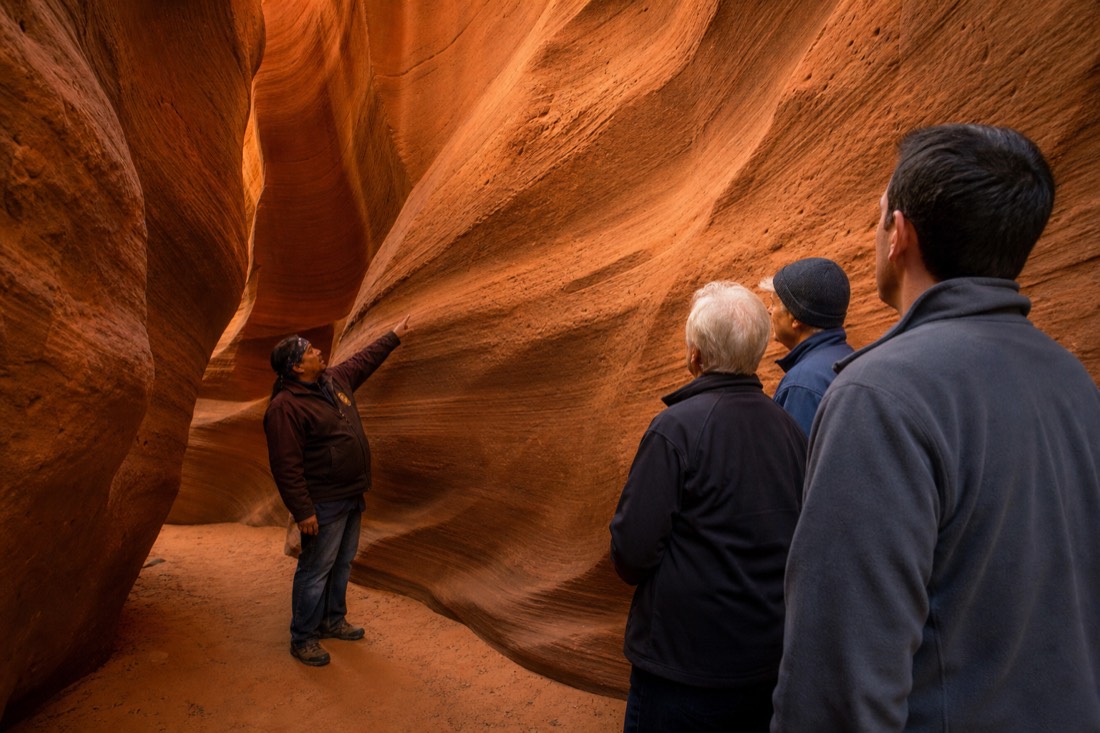
Drones and alcohol are prohibited across Navajo Nation land, pets are not allowed on tours, bags are banned by at least one Lower operator, and the canyon is a sacred site: no climbing, no wandering off, no scattering of ashes, and no photographing people without asking. Follow the guide, and the rules mostly take care of themselves.
I say this as a Navajo guide who works inside the same permit system in Monument Valley: the rules that surprise photographers are not arbitrary. They protect the canyon's walls, the people in the group, and the meaning the place carries for the families who hold rights to it. Dixie's Lower Antelope answers the ashes question on its own FAQ because it gets asked, and the answer is no, out of respect for a sacred site. The drone ban is doubled up: the Navajo Nation prohibits them on its land, and the Park Service prohibits them across Glen Canyon next door. The bag rule is the one that changes your kit, so it gets its own row.
| Rule | Where it applies | Source of the rule |
|---|---|---|
| No drones | All Navajo Nation land; also Glen Canyon NRA | Navajo Nation Parks; National Park Service |
| No alcohol | All Navajo Nation land | Navajo Nation rules |
| No tripods, monopods, selfie sticks | Every canyon section | Operator gear ban since 2019 |
| No bags, including clear bags | Dixie's Lower Antelope, since May 2023; check other listings | Operator policy |
| No pets, including service and therapy animals | Dixie's Lower Antelope tours | Operator policy |
| No climbing walls or leaving the group | Every section | Guide instruction; sacred site conduct |
| No scattering of ashes | Lower Antelope, and by extension every section | Operator FAQ; sacred site |
| Ask before photographing people | Every section | Cultural courtesy requested by guides |
The photographer's version of respect is easy to state. Shoot the rock, ask about the people, keep both feet on the trail, and let the guide set the pace. Arizona's tourism office says the same in its primer on visiting the canyon well, and the without-a-tour guide explains why the guide is the rule that makes all the others work.
Can I bring a DSLR or mirrorless camera into Antelope Canyon?
Yes, handheld. Full-size cameras are allowed on a strap; what is banned is the support gear: tripods, monopods, and selfie sticks, prohibited since 2019. Bag rules vary by operator, so plan to carry the camera itself and check your listing about anything more.
Do the light beams happen every day?
No. Beams form only in Upper Antelope Canyon, only from late March to mid October, only around the middle of the day, and only under a clear sky. A cloudy midday in peak season produces no beam at all, which is why no operator guarantees one.
Older Upper photo-tour formats ended, but dedicated access has not disappeared everywhere. Canyon X currently offers a three-hour photography option with tripod and one camera bag permissions. Standard sightseeing walks have different rules.
Can I photograph my guide or other visitors?
Ask first. Guides are generally happy to help with your shots, and many will take photos for you at the best angles, but respect any request not to photograph people. The canyon is a sacred site on Navajo land, and that courtesy is part of visiting it well.
Your next booking step
Canyon X three-hour photography tour
Have a travel date in mind? Three hours to compose in Canyon X, with tripod and one camera bag allowed on the photography option. Check the date before arranging the rest of this part of your trip.
General starting point — confirm the exact party and date
Select a date to load the Viator schedule. Availability and final price are confirmed on Viator.
Check dates for Canyon X three-hour photography tour
Taadidiin Tours, Highway 98; arrive 30 minutes early, Arizona/Phoenix time. Return to the same site. Select the photography upgrade, not hiking. Ages 8+ per Taadidiin. Steep access; guide fee extra; confirm permit total. Does not visit Upper’s beam corridor. Nonrefundable for customer cancellation on Viator; read the exact weather-cancellation terms.
Compare routes, adjust your plan & budget
Dedicated Antelope Canyon photo tours are gone. What gear is still allowed, when the beams perform, which section photographs best, and how to shoot it well on a phone. These are different experiences, not interchangeable admission tickets. All listed guiding is in English.
Three hours to compose in Canyon X, with tripod and one camera bag allowed on the photography option. 180 minutes; English; from Page. Taadidiin Tours, Highway 98; arrive 30 minutes early, Arizona/Phoenix time. Return to the same site. Select the photography upgrade, not hiking. Ages 8+ per Taadidiin. Steep access; guide fee extra; confirm permit total. Does not visit Upper’s beam corridor. Nonrefundable for customer cancellation on Viator; read the exact weather-cancellation terms.
A timed walk among Lower’s sculpted walls, with entry and the Navajo permit included. 60 minutes; English; from Page. Ken’s Tours, Lower entrance; arrive 30 minutes early. Return to the same site. Steel stairs and narrow passages; no bags or tripods. Not recommended during pregnancy or with spinal/cardiovascular conditions. Customer cancellation: full refund at least 24 hours before departure; reconfirm at checkout.
Upper’s beam corridor with a Navajo guide; fees and taxes included. 80 minutes; English; from Page. Adventurous Antelope Canyon Tours, Highway 98; arrive 30 minutes early. Return to the same base. Ages 8+; moderate fitness. Sandy walking and the outdoor stair/hill exit; no guaranteed beams. Not recommended during pregnancy or with spinal/cardiovascular conditions. Customer cancellation: full refund at least 24 hours before departure; reconfirm at checkout.
Affiliate links: we may earn a commission at no extra cost to you. Schedule dates are not confirmed seats.